29
Oct 2009

Is AA Gill a psychopath?

OK, first up, let’s be clear about a couple of things. Although I have a Masters Degree in Psychoanalytic Studies, I’ve remained (as yet, anyways) in the academic side of the discipline. I have no clinical training or experience and am not professionally qualified to assess anyone’s mental health. I believe my grasp of theory is pretty strong by now, but diagnosis is its own unique set of skills and I make no claim to them.

Secondly, my entire knowledge of British restaurant critic, AA Gill, is gleaned from a single article in The Guardian containing but one or two direct quotations from the man. I’ve never read his writing as restaurant criticism doesn’t interest me in the slightest. So even if I did have the requisite clinical training, I don’t have anywhere like sufficient data to make a diagnosis.

I wanted to declare this because some of my regular readers, knowing my area of study, may assume that I’m making some kind of formal diagnosis here. That’s just not the case. On top of that, there’s a chance — albeit a slim one — that I may decide to pursue clinical psychoanalysis at some point in the future and I don’t want to be on record as doing anything so sloppy or unethical as making a public diagnosis of a person. Especially based upon such limited data. Even Freud himself, who was arguably rather cavalier about rushing to a diagnosis, would have balked at such a thing.

Nonetheless, when a person announces to the media that they have travelled to Africa and shot a baboon for the express purpose of getting “a sense of what it might be like to kill someone”, then they are pretty much inviting a public analysis of their behaviour. Such extreme, and I’d suggest spectacularly misjudged, pronouncements cannot be expected to remain unanalysed. Any semi-intelligent person who tells the world that they have an urge to be “a recreational primate killer” (his words) having already admitted that they were merely using the baboon as a stand-in for a human being, must accept that those of us in the field of psychoanalysis (whether academic or clinical) will inevitably view his comments through the lens of our learning.

And quite frankly, it’s a lens that does not show Mr. Gill’s claims and behaviour in a positive light. The Guardian article includes the following paragraph which — along with the “recreational primate killer” comment — reveals, I’d argue, a very dark aspect of his personality…

Gill admitted he had no good reason for killing the animal. “I know perfectly well there is absolutely no excuse for this,” he wrote. “There is no mitigation. Baboon isn’t good to eat, unless you’re a leopard. The feeble argument of culling and control is much the same as for foxes: a veil for naughty fun. I wanted to get a sense of what it might be like to kill someone, a stranger. You see it in all those films: guns and bodies, barely a close-up of reflection or doubt. What does it really feel like to shoot someone, or someone’s close relative?”

Those last four words are what lifts Gill’s statements out of mere testosterone-fueled bloodlust (which, sadly, we must accept is too common an element of human psychology to warrant classification as being extremely abnormal) and into something a little more chilling. The desire to kill is not itself psychopathic, but the specific urge to inflict the grief of bereavement upon a stranger’s family is certainly moving in that direction.

To then go one step further and act upon that fantasy suggests the sort of escalation in Gills’ “urges” that would almost certainly concern a psychiatrist or psychoanalyst if they witnessed it in one of their patients. It’s a cliché in fiction, but it is nonetheless true; violent psychopaths begin with fantasies of killing people, progress to killing animals, discover it doesn’t fulfill the urge they feel and, the worst of them, wind up going further. They often revel in — to the point of receiving a powerful sexual charge from — the suffering they have caused to those around their primary victim. It’s an extreme form of sadism.

Given this, one is forced to wonder whether perhaps Gill’s decision to publicly announce his sadistic fantasies might not be a cry for help?

“Stop me before I kill again.”


UPDATE 11:56: One commenter writes… “I’m gonna shoot AA Gill to get a sense of what it’s like to kill a baboon”. Well, it made me laugh.

11 comments  |  Posted in: Opinion


28
Oct 2009

Cassetteboy vs Nick Griffin vs Question Time

Nick Griffin on Question Time.

2 comments  |  Posted in: Media » Video


23
Oct 2009

The BNP on Question Time in retrospect

Well, I’m disappointed it went ahead. Don’t get me wrong, I’m not suggesting that Nick Griffin put in a stellar performance. He certainly didn’t. But I never expected him to. That was never the issue. He was always going to look either nasty or idiotic when forced to defend his views. Because his views are nasty and idiotic. That was never in doubt.

There were those who insisted it was actually a good thing that the BNP were appearing. In the comments to my previous piece on this, Joel argues that “it puts his neck closer to the noose so he can hang himself”. And there are many who share this view. He’ll be damned by his own words, they say, so let him speak.

I don’t share that view. Which is not to say it’s wrong. Merely that an appearance on Question Time doesn’t only damn him by his own words. It has other consequences too. Some of which are negative. “The BNP are not being normalised into society by being on Question Time, it’s just having a clown on”, wrote Joel. But I humbly suggest that it’s both. It almost always is. He may indeed have moved a few millimeters closer to the noose. But we tend to hang fascists after they’ve killed a bunch of people.

It’s taken the National Front decades to evolve to the point where their suited representatives now get invited on Question Time. This was never about an overnight bump in the polls, but about how the fascist voice slowly but surely enters everyday political debate. The next decade may well be a fertile breeding ground for fascism. I believe the global economy will begin to absorb the fact that the days of “growth” are coming to an end. I think resource depletion will become a mainstream and frightening idea and even if we succeed in shifting to a sustainable model, the transition period could involve major social upheaval. The kind of environment that the Far Right historically tends to exploit. The very last thing we should be doing as the global economy teeters on the brink is inviting the BNP, and those like them, into mainstream debate.

Just before Question Time last night the BBC News discussed the issue themselves. And the language used very clearly implied that this would be the first of several invites extended to the BNP leader. This very fact… that the BNP leader gets regular invitations to debate with the other parties before an audience of millions… makes it far more likely that Griffin will be replaced sooner or later by someone more effective at the job. And you can pretty much guarantee that by the BNP’s third appearance on Question Time, Dimbleby won’t be dedicating 90% of the show to picking them apart. There’ll be the inevitable couple of “BNP questions”, but otherwise Griffin will get to speak freely on subjects where his views may resonate with millions. I happen to think his positions on the Iraq / Afghanistan wars are fairly sound, for instance, and in that discussion he’ll come across as the sane one compared to the tories and labour. Last night there was one non-BNP question. Next time?

I’m also irritated by how reasonable he made Jack Straw appear. “Contributing to the credibility of Jack Straw” is itself an unforgiveable offence. Both Griffin and the BBC are responsible for that crime against the people.

Overall though, I’m worried that the BBC set a bad precedent last night. It’ll be a long time before we know for sure, but why even take the risk when it comes to fascism?

7 comments  |  Posted in: Opinion


22
Oct 2009

The air we breathe

Ladies and gentlemen, the future.

Airpod

The Airpod, air-powered car.

That air stuff… it’s great when you think about it. A ubiquitous, but entirely unobtrusive mixture of gases that’s wrapped around our planet several miles deep and provides fuel for many of the processes that occur within our body. It isn’t so much “easily accessible” as it is “impossible not to access” under normal circumstances.

Now before anyone looks at that strange little car and starts thinking either (a) that compressed air is the solution to our energy crisis, or (b) that I’m suggesting compressed air is the solution to our energy crisis, let me please request you stop thinking it. Because it’s not. And I’m not.

What I am suggesting, however, is that compressed air is a far better energy-carrier than batteries (or hydrogen fuel cells).

Let me qualify that statement.

Firstly, I’m not really talking about cars here. I still view the personal car as unsustainable, though there’s no reason compressed-air buses couldn’t be part of a future public transport system.

And secondly, I’m not speaking specifically about the energy-efficiency of compressed air Vs batteries.

What I am suggesting is that a wind-turbine powering your home / apartment building / housing estate (scale up as required) could be connected to an air-compressor during off-peak hours. Then when it’s calm and the turbine isn’t moving (or the sun isn’t shining, if solar panels are your primary generator) the compressed air can be used to produce electricity. It beats almost every other energy system I can think of hands down in the sustainability stakes. As well as the sheer elegance of the idea.

See the trouble with batteries is that they’re pretty short-lived, all things considered. They need to be replaced every few years and disposing of the old ones often involves dealing with nasty chemicals. With a compressed air system, on the other hand, you need a machine-shop and a bit of know-how (or the phone-number of someone with a machine-shop and a bit of know-how… hint: see the Yellow Pages under ‘Mechanic’) and you’ve got something that’ll last indefinitely. I’ve seen compressors in factories that have been lovingly maintained for thirty years and which, given continued loving maintenance, should last at least thirty more. I watched the mechanic in an Egyptian bottling plant manufacture spare parts for his compressor from a pile of off-cuts in the yard. No it wasn’t the prettiest piece of equipment I’d ever seen, with at least half of it having been replaced with local scrap over the years, but it still functioned to a high level of efficiency.

Compressed air is not without its dangers. But as an energy carrier it sure beats hydrogen in that respect. And compressor technology is old and proven. Over the decades we’ve made it pretty damn reliable. I have a hunch that “reliable” is exactly what we need right now.

Leave a comment  |  Posted in: Opinion


18
Oct 2009

The BNP on Question Time

Question Time is the BBC’s flagship political debate show in which a panel of four or five political figures discuss the issues of the day and answer questions posed by a studio audience. This week one of the panel members will be Nick Griffin, leader of the British National Party.

And in my view, this is a mistake. Generally I’m a fan of the BBC, but on this BNP issue they’ve got it wrong. Nick Griffin should never be invited to appear on Question Time.

Context is everything.

See, it’s fine to interview Griffin (on the BBC or anywhere else). Don’t get me wrong, I’m not proposing that the BNP or any other political party be censored. By all means invite him onto Newsnight and have Paxman grill him about the legality of his party’s constitution. But when you give a fascist a platform, you must ensure it’s a clearly labelled platform. That kind of ethnic nationalism needs to be ringfenced and signposted. We already know where it leads. And we’ve seen it happen enough times now to be aware that it’s not something that can be ignored. It’s not like we arbitrarily decided to repress some random political ideology. Just plucked it out of a hat on a particularly slow day at the UN. Racial supremacy and ethnic nationalism have a well-established track record. It’s a dangerous tendency and it tears apart societies when it gets strong enough.

Can you even begin to imagine a Britain where the BNP polled enough of the (white) vote to establish a government? Imagine the consequences of such a social divide! That’s what the BNP is actively seeking and campaigning for, never forget it; a disaffected Britain, paranoid and riven with internal fractures. An ugly place dominated by viciousness and suspicion and hatred of The Other. You’d imagine we’d have moved past that by now, learnt the lessons — the numerous lessons — of history. Does Britain really want ethnic violence on the streets? Because the BNP… they kind of do. And worse perhaps? You only need to ask the people of the Balkans how quickly things get out of hand when that kind of ideology gains enough traction.

So when the BNP — or any ethnic nationalist — appear in the mainstream media, that’s the context they should be presented in. Introduce them as fascists, let them speak their piece, then remind everyone they’ve just been listening to fascists.

What the BBC should not be doing, is inviting the BNP onto Question Time as though they were just another feature on the political landscape. This is effectively normalising the fascist voice. Removing the ringfence. Bringing it to the discussion and lending it the same weight as any other voice. That right there is a textbook example of ethnic nationalism starting to gain traction.

The BNP are a fit subject to be discussed on Question Time. They should not be participants.

2 comments  |  Posted in: Opinion


18
Aug 2009

Summer's not for blogging

Hey y’all.

Yeah, I’ve been absent for a while and am just about to head off to sunny Montenegro for two weeks. So I’ll be absent a while longer. Expect a return to semi-regular blogging in September. Summer’s just not the time for it.

I’ve not been writing as much as I’d like, and the two major projects that I’m working on have kind of stalled. But I’ve had quite a lot of ideas for them once I get back up and running — and frankly I’ve been enjoying the downtime. There’s the occasional pang of guilt about not getting stuff done, but it is very occasional… an echo of my long dead work ethic (it nearly killed me, I responded in kind). Summer is for drifting. For enjoying the company of a lovely lady and reminding yourself that it’s OK to live life effortlessly for a while — if you’re lucky enough to be in a position to do so. Neither work nor leisure. Amen to that, brother.

That said, there’s been plenty happening lately that would have drawn remark had I been actively blogging. The fact that the entire economy over here could collapse at any moment has added a certain edge to Irish politics just now… to Irish life in general in fact. Politicians and business leaders are looking increasingly like they’re not getting enough sleep.

The nation is bankrupt though nobody wants to be the first to put it in those terms. The bank guarantees are now the only thing propping up the financial system… but the bank guarantees will bankrupt the country if actually called upon.

There’s a vague hope that if the government can engineer a ‘Yes’ vote in our second Lisbon referendum (far from a foregone conclusion) that the EU might — just might — step in and help bail us out. The EU firmly denies that’s even possible, let alone likely.

But in the corridors of power in Europe the Irish have a single last-gasp ace in the hole. The uneasy thought in the minds of Europe’s bankers that while Ireland has clearly been the architect of its own downfall, it is actually small enough to bail-out. And the cost of that bail-out might well be cheaper than the impact on the single currency and Central Bank of a member state collapsing. Because nobody’s really sure what it means for a member of the Euro to go bankrupt. That’s just got to be an event with all manner of unexpected consequences.

Whatever happens though, one thing is certain, for a very long time we will all be paying for the follies of the last decade. And for the bizarre decisions made by the banking and construction sectors.

Don’t get me wrong. The entire country was possessed by that rampant Celtic Tiger. Every sector was making bizarre decisions. 4 million people embarked upon a decade-long binge. A bonfire of over-consumption with everyone eager to fan the flames. Politicians, retailers, banks, the hospitality sector, the auto industry, the land-developers… just everyone!

But although everyone was possessed by the same madness, it’s the land developers and bankers who created the vast majority of the debt. Approving loans based upon valuations that bear all the hallmarks of having been arrived at after an afternoon of champagne and cocaine. Tens of billions of euros just disappeariing.

Sadly, my own solution isn’t really catching on…

Phase I: Round them all up. Yes, every banker, developer and politician… in fact anyone at all who was a “decision maker” during the past 10 years. They know who they are and frankly should have the decency to step forward.

Phase II: Stick ’em all in one of those ghostly half-full developments that sprung up around Dublin during the boom. Homes built for an imaginary profit not because anyone actually wanted them. Keep them comfortable, well-fed and let them have all the Sky Channels for free. But keep them there.

Phase III: Nationalise everything (starting with every asset currently owned by Shell Oil in this country. Honestly, the gall of that company, selling our gas back to us at a profit!)

Phase IV: Come round to my place and ask me what to do with it all, now it’s been nationalised. I imagine Phases I through III will take a few weeks. I’ll have worked out what to do next by then (hint: it’ll probably involve a combination of private property rights, socialised services and collectivised production… think Cuba via Stockholm with a heavy dash of Deep Ecology).

Anyhoo, enjoy what’s left of the summer.

I’m planning to.

1 comment  |  Posted in: Opinion


27
Jun 2009

The Sunday papers

I read the news today, oh boy…

So sang Neil Young during his Glastonbury encore. I rarely watch festival coverage on TV as it always falls so far short of the actual experience, that I usually end up annoyed rather than uplifted or entertained. Yesterday though, I got completely caught up by The Specials and wound up watching almost their entire set. Thanks to the wonders of modern television, the BBC offered me five screens to choose from. I lingered briefly on each screen (some recorded, some live) to get a flavour of the festival, and I’m clearly showing my age when I confess that The Specials were head and shoulders above the rest. Lily Allen, Lady Gaga, N.E.R.D. and Fleet Foxes all went up against them on the beeb’s interactive coverage. And all seemed somewhat lacking in energy by comparison. A bit lifeless really.

Don’t get me wrong, the crowd seemed to be having a good time at each of the performances, but musically there was just no comparison. Next to songs like Monkey Man, Concrete Jungle, Ghost Town (of course) and a blistering version of A Message to You, Rudy the others just fell flat.

Later, having sat down with a pizza and a DVD (OK, not the edgiest way to spend the Friday night of Glastonbury… I’m pacing myself) I flicked back on the Glastonbury coverage in time to catch the very end of Neil Young’s set. If the encore was in any way characteristic of the entire performance, then I suspect I just missed one of the great Glastonbury shows. Young radically reinterpreted the classic Beatles song, A Day in The Life, turning it into a feedback laden, bass-driven piece of grungey folk-rock. Or something. It was hard to tell exactly what was going on, what with Young having broken every string on his guitar by the time he’d reached about three quarters way through the song. Still he drove it on though, raking the broken strings across the pick-up, the amps, the mics, whatever he could find. All the while stamping on his effects pedals as though he could literally squeeze extra noise from them.

When he finally finished beating the hell out of his guitar with a mic-stand, he strode off stage in the manner of a man looking for a fight. I’d barely had time to utter the words, “Now that’s a real rock star!” before he reappeared to spend about twenty seconds gently tapping on a xylophone before disappearing for good. Incongruous to the end.

Farewell, Mr. Jackson

Of course, despite Glastonbury going on, the big music news of the moment is the death of Michael Jackson. I didn’t really “get into” music until my mid-teens, but Thriller was a huge thing even for me. The video, the songs, the moonwalk, that one white glove… it was more cultural event than album. Did you know that worldwide, Thriller has sold more than twice as many copies as the next highest selling album? It’s sold over 100 million copies. No other record has ever topped 50 million. The popularity of Thriller exists on a whole different level to other records.

And while I rarely play Jackson’s two truly classic records (Thriller and Off the Wall), and while I wouldn’t rate them among my personal favourites, I can nonetheless appreciate the greatness that lurks within. I may be doing the modern music industry a disservice here, but it seems to me that 83% of all records made today — from Beyonce to The Black-Eyed Peas — are faded copies of Thriller. But when Michael Jackson, Quincy Jones and their crew entered the studio in 1982 they were inventing that sound. It was new and exciting, and you can hear that excitement on the record.

I listened to Thriller again yesterday for the first time in a good while. Within 30 seconds of the start of the first track (Wanna Be Startin’ Somethin’), it’s only a willful curmudgeon who isn’t having fun (Yeah! Yeah!)

The entire album glides effortlessly along on a series of glorious grooves. Criticisms that it’s “over-produced” or “too smooth” or “too 80s” are — in my view — missing the point entirely. The joy and energy of Thriller isn’t airbrushed out of existence by that highly polished production and arrangement, as happens with almost all of the imitators. Instead, it’s amplified and thrown into sharp relief. It’s celebrated.

And that’s how I intend to remember Michael Jackson. The rest of the stuff? The media circus? I’ll let that slide by.

2 comments  |  Posted in: Opinion


21
Jun 2009

The Longest Day

Happy Summer Solstice, y’all.

The Street Performance World Championship is currently on in Dublin, so that’s how I’ll be spending Midsummers Day this year. There’s some good weather forecast and the park in Merrion Square is a lovely place to spend a sunny day — even without the promise of a free festival. Eight stages and an extremely eclectic line-up. Like any festie, it’ll be hit and miss I’m sure, but I’m also sure that there’ll be some gems to be discovered and — as I say — it’s a nice location to spend a summer afternoon. If you’re in Dublin, why not get down there?

Speaking of festivals, it looks like the weather will be good for Glastonbury this year (if the long-range forecast is to be believed). The line-up is excellent and really makes me wish I’d gotten some tickets. I’m still planning on one last Glastonbury (perhaps next year?) It was one of the most important dates in my calendar for a decade and I always had a blast. Except for the last one. The last time I went to Glastonbury, it was a disaster… both in terms of the weather and from a personal point of view (things were starting to get a bit grim in my life at the time). So I want to return for one last hurrah. End my relationship with Glastonbury Festival on a high note.

My tip for this year, if you’re going to be there, and assuming they don’t clash with one of your favourites — is to check out Lamb on the Jazz/World Stage on Friday afternoon. Always good live.

And of course, if you’re there and don’t make your way to the Pyramid Stage on Sunday night, then you really don’t know what’s good for you…

1 comment  |  Posted in: Opinion


16
Jun 2009

Dublin, statues and Ulysses

I’ve written in the past about the way a city’s statues go some way towards revealing its soul.

And let’s face it, the whole idea of statues is pretty amazing in the first place. Imagine if we encountered a previously undiscovered sub-species of chimpanzee who left intricately carved versions of their ancestors in the places where they gathered. Viewed objectively, it’s a strange thing for an animal to do. It’s a bit like leaving huge signs all over the place with the words “We’re really scared of Death” printed on them. Or maybe I’m reading too much into it.

Still, however you explain it, there’s no question that a place reveals much about itself through its choice of statues. Certainly at the most basic level, the statue is a reassurance to us all. “Death is not the end”, it whispers, “For I am still among you”. But statues of anyone will fulfill that role. What’s revealing is our choice of exactly who we choose to call back from the dead to remain with us.

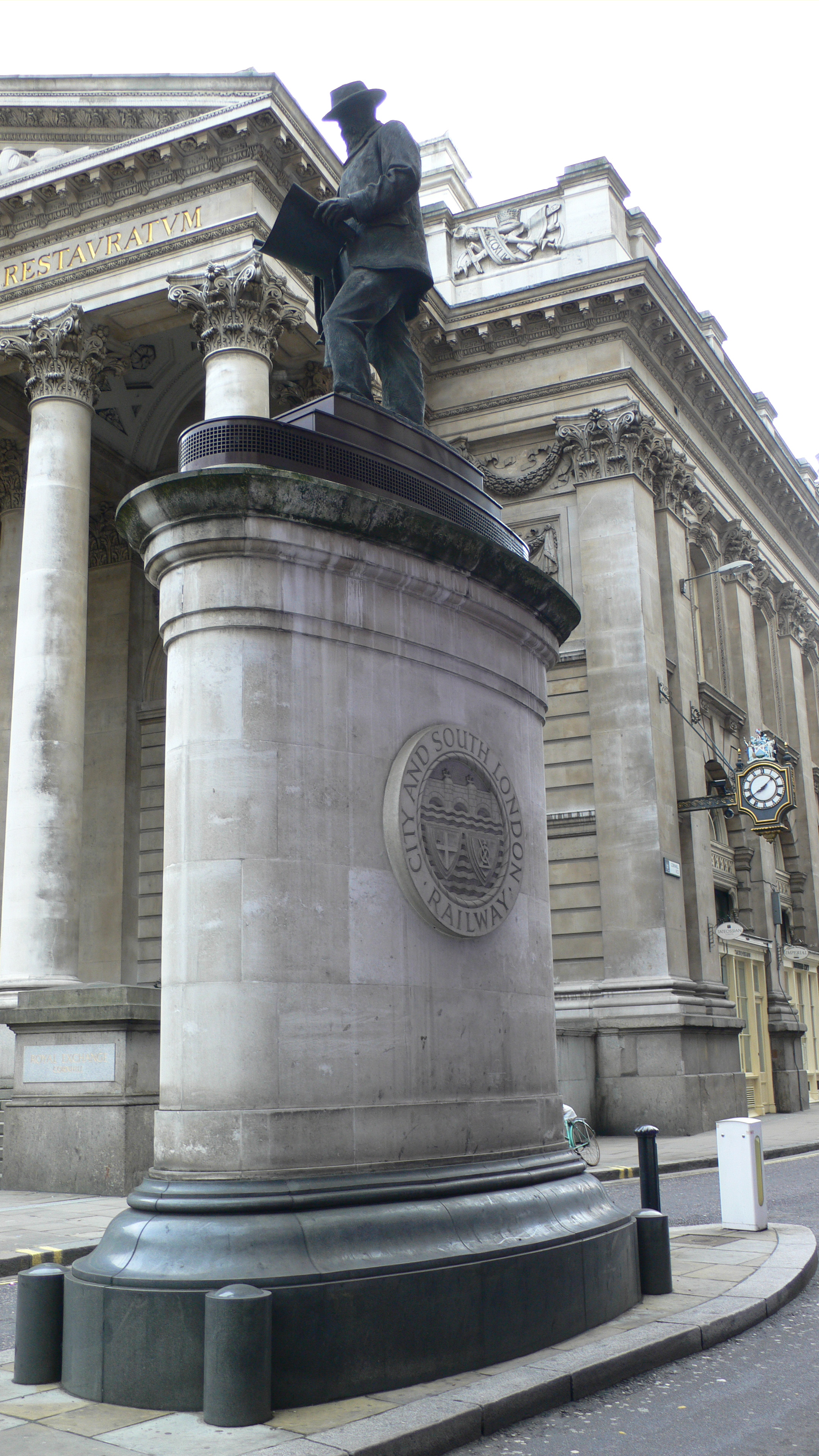
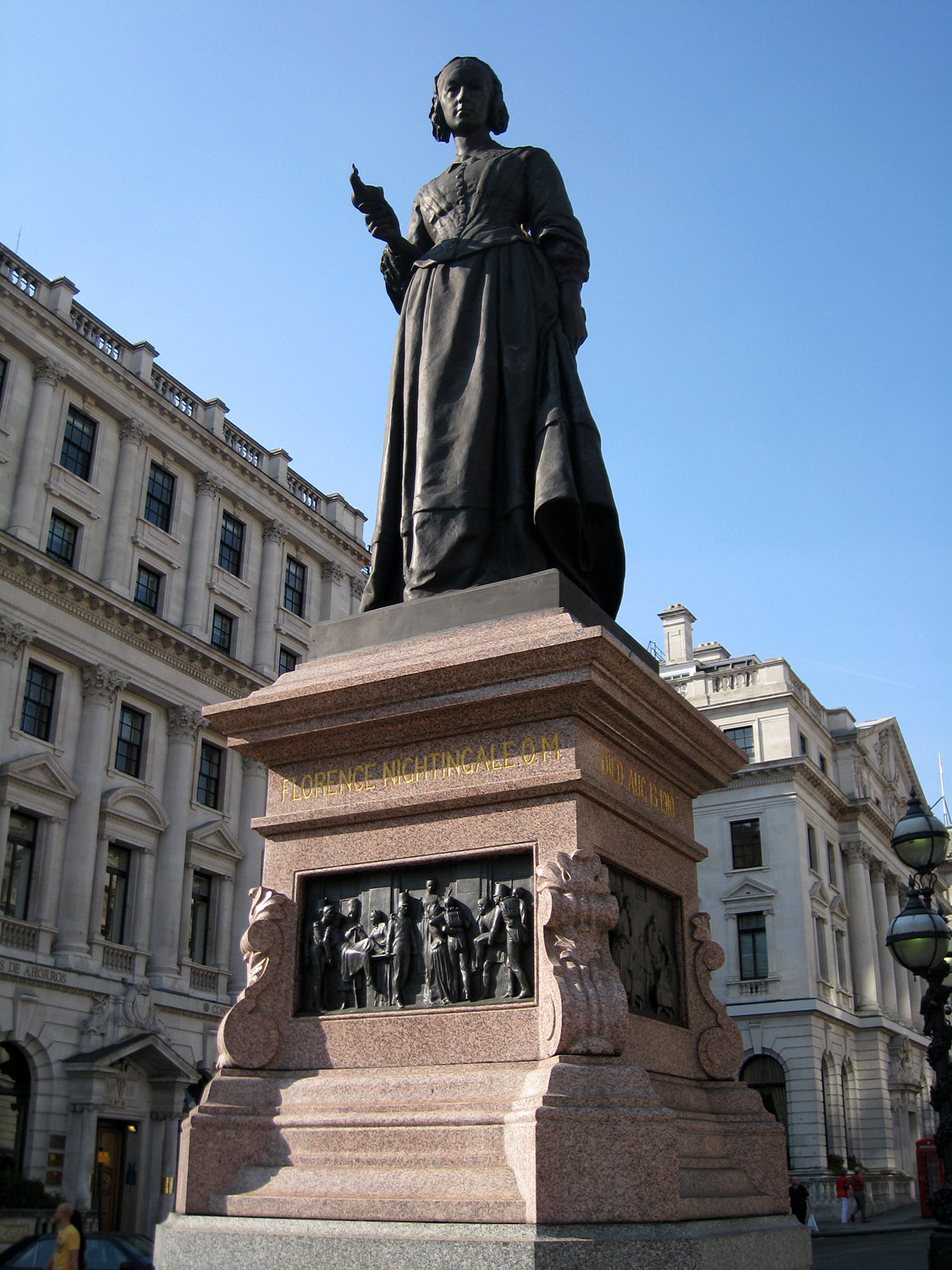
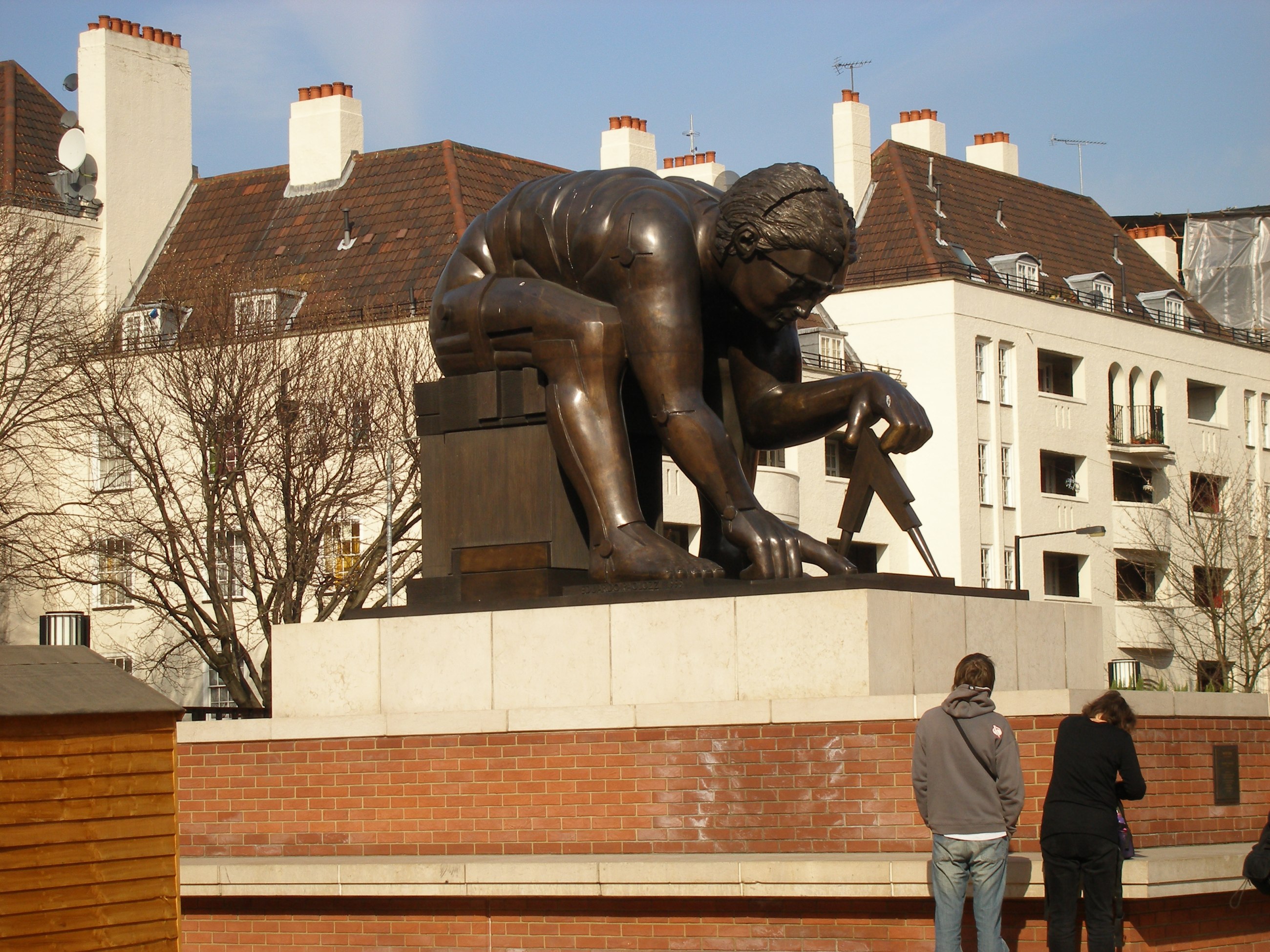
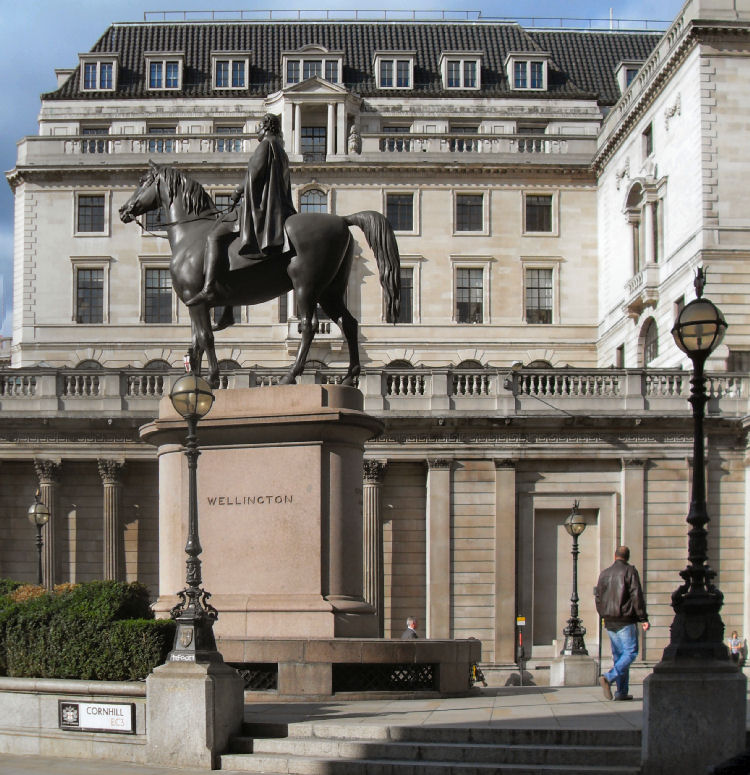
Take London for instance… it’s big enough and old enough to contain statues of people from all walks of life. Engineers, nurses, scientists, fictional cokeheads, the lot.

But mostly it’s soldiers. Lots and lots of soldiers. Men who excelled at killing people from beyond the city walls, or who were cruelly killed by people from beyond the city walls. And we invite them back to stand silently among us. One of them stands atop a pedestal so high, you can’t really see him clearly.

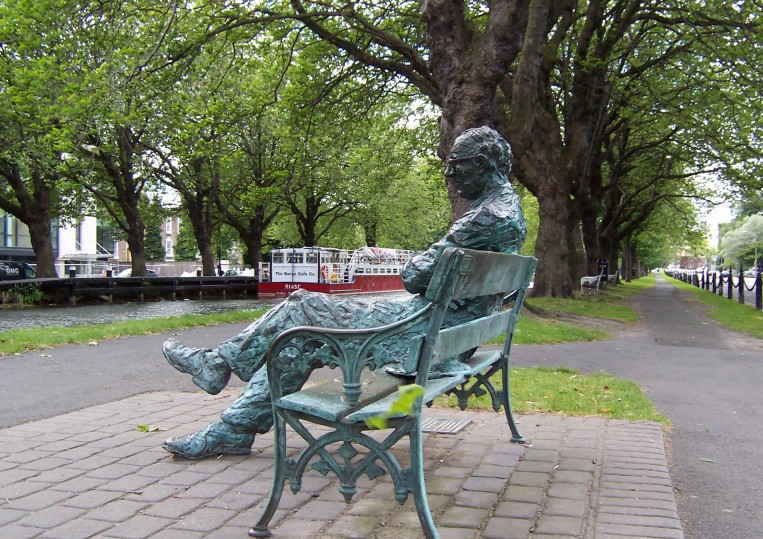
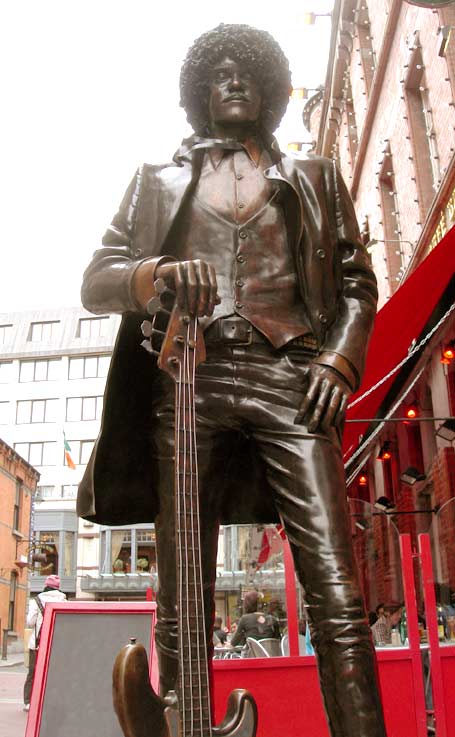
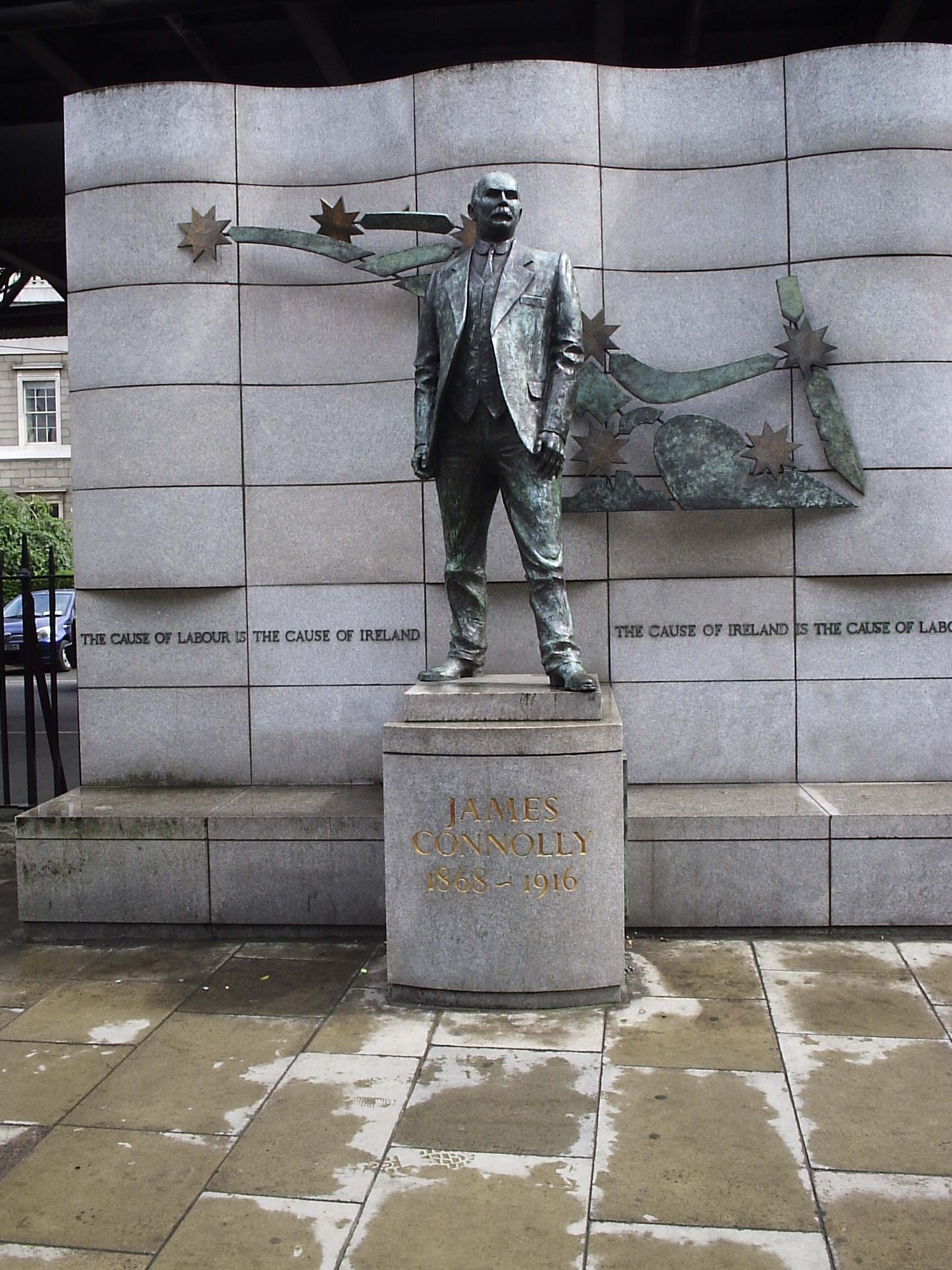
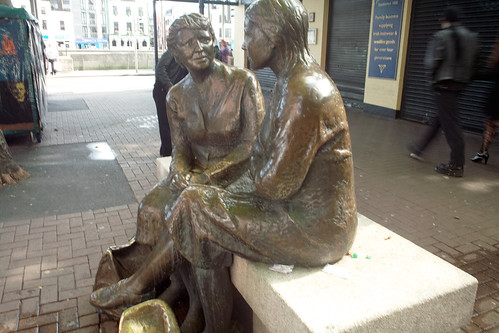
Here in Dublin, the situation is quite different. There’s plenty of statues to fighters, certainly, but they tend to be rebels and revolutionaries, which alters the message significantly. And they’re equalled in number by poets, musicians and radical socialists. As well as the occasional statue to the ordinary people of the city.

The stone celebration of military conquest that is so ubiquitous on the streets of London (and pretty much every city in a nation that once possessed an empire) is almost entirely absent here in Dublin. This is both a result of, and a further influence upon, the collective psyche of the place. Statues create a positive feedback loop that help solidify a culture.

June 16th

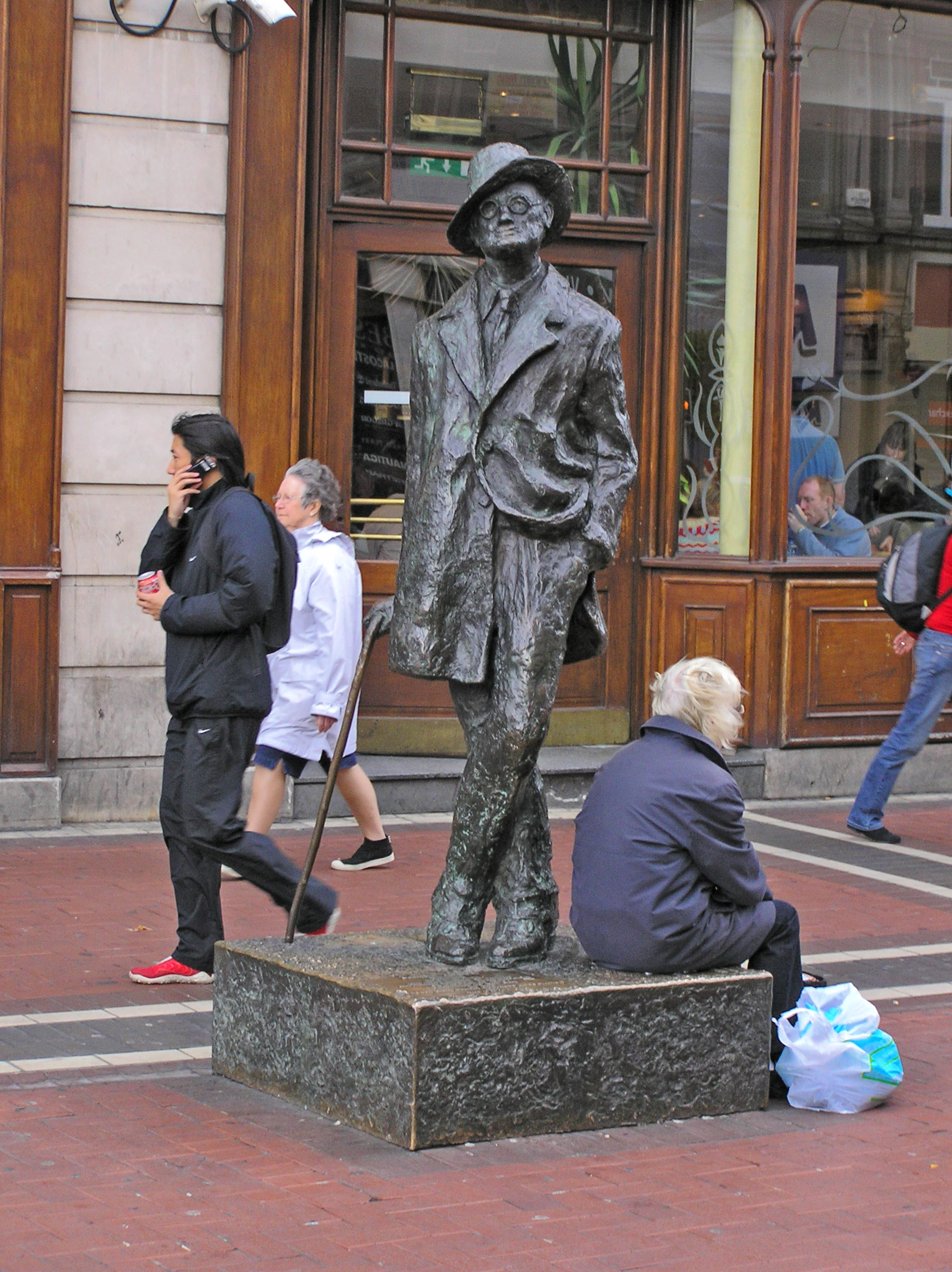
One of Dublin’s most striking statues, of course, greets you from the corner of North Earl Street as you walk up the city’s main thoroughfare — O’Connell Street. There he stands; artist and revolutionary thinker; James Joyce.

James Joyce statue

Many cities celebrate their local artists just as much as Dublin celebrates Joyce of course. But June 16th in Dublin is quite unique. I’d planned on doing the whole “Bloomsday thing” this year — y’know, donning period garb and following in the footsteps of Leopold Bloom’s Great Wander. I’d probably skip the breakfast of offal, but I figure I could make up for it with a couple of extra pints along the way. Sadly the day just crept up on me, and I realised too late that it was this week. Silly me.

To make up for it, though, I have vowed two things. Firstly to re-read Ulysses (the single greatest work of literature in the history of humanity) before June 16th next year, and secondly to make absolutely certain that appropriate clothes are hired for both myself and Citizen S in plenty of time next summer. Anyone else up for it? You’ve got a whole year to plan it. And even if you don’t feel like dressing in a turn of (last) century stylee, it’ll still be a fine day out.

There are sins or (let us call them as the world calls them) evil memories which are hidden away by man in the darkest places of the heart but they abide there and wait. He may suffer their memory to grow dim, let them be as though they had not been and all but persuade himself that they were not or at least were otherwise. Yet a chance word will call them forth suddenly and they will rise up to confront him in the most various circumstances, a vision or a dream, or while timbrel and harp soothe his senses or amid the cool silver tranquility of the evening or at the feast at midnight when he is now filled with wine. Not to insult over him will the vision come as over one that lies under her wrath, not for vengeance to cut off from the living but shrouded in the piteous vesture of the past, silent, remote, reproachful.

James Joyce | Ulysses

Or…

— That’s your glorious British navy, says the citizen, that bosses the earth. The fellows that never will be slaves, with the only hereditary chamber on the face of God’s earth and their land in the hands of a dozen gamehogs and cottonball barons. That’s the great empire they boast about of drudges and whipped serfs.
— On which the sun never rises, says Joe.
— And the tragedy of it is, says the citizen, they believe it. The unfortunate yahoos believe it.

James Joyce | Ulysses

Or…

Mr. Bloom walked unheeded along his grove by saddened angels, crosses, broken pillars, family vaults, stone hopes praying with upcast eyes, old Ireland’s hearts and hands. More sensible to spend the money on some charity for the living. Pray for the repose of the soul of. Does anybody really? Plant him and have done with him. Like down a coalshoot. Then lump them together to save time. All souls’ day. Twentyseventh I’ll be at his grave. Ten shillings for the gardener. He keeps it free of weeds. Old man himself. Bent down double with his shears clipping. Near death’s door. Who passed away. Who departed this life. As if they did it of their own accord. Got the shove, all of them…

James Joyce | Ulysses

I didn’t search for those passages. Just opened three random pages and got three amazing pieces of writing. There’s not a single page in the 900 that doesn’t crackle with energy, beauty and insight.

Leave a comment  |  Posted in: Media » Photos, Opinion


12
Jun 2009

British National Party: Is the BNP racist?

Is the BNP racist?

This is a brief addendum to the last post, rather than an article in its own right. But I wanted to post it separately for search ranking reasons. It goes without saying that the British National Party (BNP) understand that being publicly labelled as “racist” loses them more votes than it gains. As a result, they do much to avoid the word. They claim they’re simply an “organisation concerned with one community or race”. As such, they insist, the BNP is just like other such organisations (such as the Black Police Officer’s Association, or the Action Group for Irish Youth).

This is, of course, complete nonsense. And in this articleIs the BNP racist? — Matt Wardman explains exactly why.

Is the BNP a racist party? Yes. It is. And don’t let them try to pretend otherwise.


UPDATE (20:23) FlyingRodent makes an excellent point about the BNP.

I hope it’s not too extreme to point out that our granddads’ response to their generation’s Nazis was to bomb them and strafe them from the air; to shoot them with machine guns and rifles; torch them with flamethrowers, incendiaries and white phosphorus; to crush them with tanks, blow them up with grenades and high explosives and so on, and then march their supporters off to prison. I don’t know how people could’ve missed this, since we have well-publicised memorials at which we salute their courage for kicking Nazi arse so righteously, every single year.

Not that I think this would be a reasonable response to the BNP, of course, but it sure puts all this Oooo, we must understand the motivations of poor, misguided racists who consciously vote for Nazi organisations in perspective.

It’s particularly amusing when you consider that lots of the right wing commenters here spend much of their time grousing about a lack of chimpanzoid chest-thumping and ostentatious moral outrage in modern liberalism – yet suddenly, when we’re talking about an openly racist and fascist organisation, we have to understand.

Well, Bollocks

(via PDF)

2 comments  |  Posted in: Opinion